

Highlights:
– U.S. Defense Secretary Pete Hegseth criticizes European nations for their handling of migration during a D-Day anniversary speech in Normandy.
– Migration has become a pivotal issue in European politics, with hardline immigration stances gaining traction.
– Political leaders in Europe and the U.S. continue to respond to and reflect on the implications of shifting migration patterns and policies.
The D-Day Context and Migration Concerns
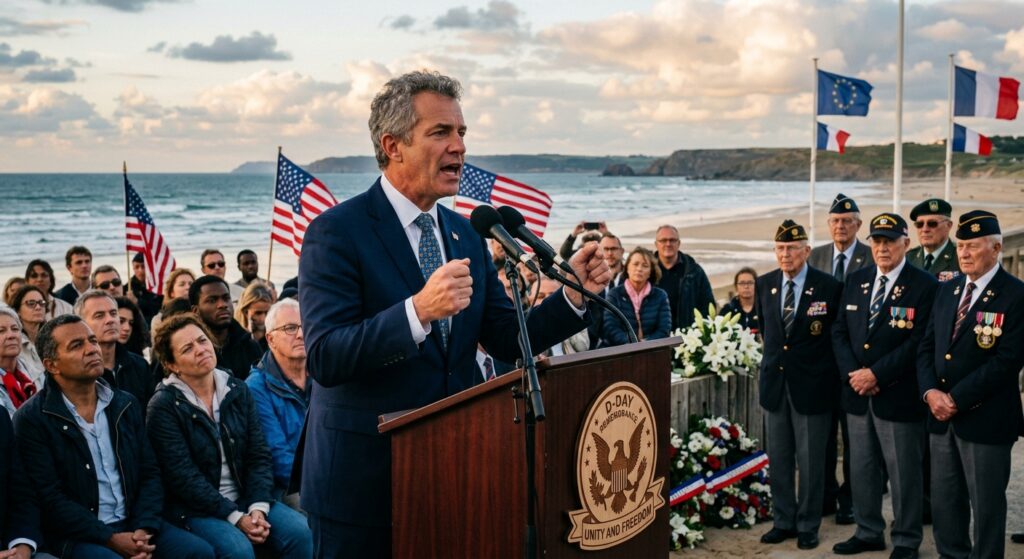
During a solemn ceremony marking the 82nd anniversary of D-Day in Normandy, U.S. Defense Secretary Pete Hegseth directed pointed criticism at European nations for their immigration policies. He described the situation as an “invasion” on shores that once witnessed the heroic landings of Allied forces during World War II. Hegseth’s remarks highlight an ongoing concern within the U.S. administration regarding Europe’s handling of migrant arrivals from various countries, alluding to a broader narrative where freedom and security are perceived to be at risk.
The historical significance of D-Day, where thousands of troops landed to liberate France from Nazi occupation, serves as a stark reminder of the sacrifices made for liberty. Hegseth’s comments juxtapose the past with contemporary challenges, suggesting that some European capitals may have taken their freedoms for granted as they grapple with increasing migration. This remark resonates with a growing political sentiment across Europe, where hardline immigration policies are gaining popularity amid rising concerns over national security and cultural identity.
Immigration Policies and Political Rhetoric
Diving deeper into the topic, the criticism from Hegseth aligns with the Trump administration’s sustained focus on immigration control as a cornerstone of its policy agenda. The administration has requested significant funding to bolster enforcement capabilities, indicating a clear intention to prevent what they perceive as unchecked migration. Recent comments by U.S. Vice-President JD Vance further suggest a political strategy that links migration to violent crime, citing the tragic case of Henry Nowak, which has sparked controversy and debate over its implications for public discourse.
Moreover, the rise of right-wing and anti-immigration parties across Europe highlights a shift in political dynamics, one that often capitalizes on fears surrounding migration. Statistics show that sea arrivals in the region peaked dramatically in 2015, attributed largely to the Syrian civil war and other geopolitical crises. With over 169,000 combined sea arrivals recorded in a recent year, the European migrant crisis remains a salient issue with societal implications across the continent.
Implications and Future Considerations
As European leaders respond to these rhetorical pressures, the implications of such discourse cannot be understated. The backlash against Hegseth’s comments from British officials emphasizes the sensitivity surrounding the integration of migrant narratives into national conversations. Deputy Prime Minister David Lammy’s caution against polarizing rhetoric reflects a growing awareness that language can rapidly escalate tensions in increasingly diverse societies.
Moving forward, solutions to the complexities of migration will require a balanced approach that champions human rights while safeguarding national interests. As political landscapes evolve, the dialogues surrounding immigration and integration will play critical roles in shaping the future, leading to the need for thoughtful engagement and policy-making.
In conclusion, the ramifications of Hegseth’s commentary extend beyond policy critiques; they invite a broader reflection on the nature of freedom, security, and the values that underpin societies. How can European nations reconcile the challenge of migration with their historical legacies? What role should international dialogue play in developing comprehensive immigration policies? Are hardline immigration stances beneficial or potentially detrimental to national unity? These questions remain central to ongoing discussions in both Europe and the U.S.
Editorial content by Casey Brown