

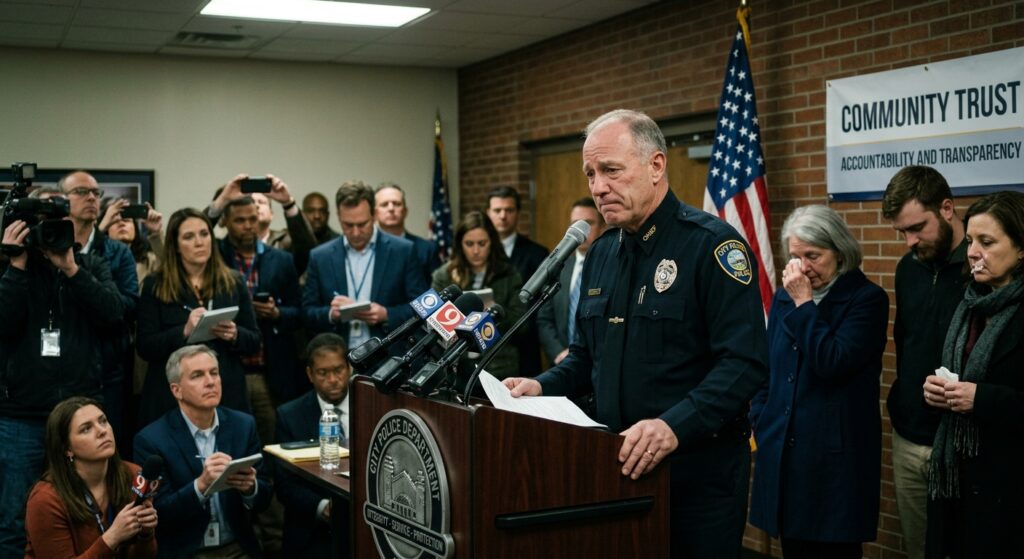
In a deeply unsettling incident, the Chief Constable of Hampshire Police has publicly apologized to the family of Henry Nowak, whose tragic death was compounded by his being handcuffed and arrested as he lay dying from stab wounds. Much of the outrage stems from bodycam footage that shows the 18-year-old pleading for help while officers proceeded with an arrest, having been misled by the victim’s murderer about the circumstances of the attack.
This situation has ignited a firestorm of emotions and debate over police procedures and community trust, raising significant questions about how law enforcement engages with the public in life-and-death situations. This case not only highlights the sorrow of a grieving family but also reflects systemic issues within the police force that require examination and, potentially, reform.
The Disturbing Incident and Its Aftermath
Chief Constable Alexis Boon expressed his distress after viewing the bodycam footage that documented Nowak’s final moments. The footage reveals a disturbing scenario where the teenager, who had been stabbed four times, repeatedly informed the officers that he could not breathe while they handcuffed him. The situation escalated after Vickrum Digwa, the murderer, falsely accused Nowak of racial abuse. Consequently, he was sentenced to life in prison with a minimum 21-year term.
Boon offered sincere apologies on behalf of Hampshire Police, stating he was deeply troubled by the circumstances that led to Nowak’s treatment. He confirmed that one of the officers visible in the video has since left the force, while three others have been reassigned from frontline duties. However, he also stressed that he would not resign from his position amidst the fallout and pledged to await the findings from an Independent Office of Police Conduct investigation.
Wider Implications and Calls for Reflection
The incident has provoked significant public and political reactions, with many questioning the police’s priorities during critical situations. After sentencing, Nowak’s father, Mark, conveyed the family’s immense sorrow over their son’s death and expressed a desire for division not to grow from this tragedy. Political figures have weighed in, with critiques directed at the potential misuse of Henry’s story to foster political agendas or grievances, as seen in comments made by Sir Keir Starmer regarding Nigel Farage’s reactions to the incident.
In light of these events, various police departments are now re-evaluating their protocols regarding anti-racism commitments. Furthermore, calls for police reform are gaining momentum, as public trust declines in the wake of the mishandling of such sensitive cases. As the community mourns, many seek healing rather than further tension, emphasizing the need for compassionate outreach and understanding.
In summary, the horrifying events surrounding Henry Nowak’s death have not only left a profound impact on his family but have also raised troubling questions about police conduct and systemic failures. The community is left grappling with emotions of anger, sorrow, and a collective desire for change. As discussions continue, one must consider: How can police departments improve community relations? What steps need to be taken to prevent such tragedies in the future? And how can the memory of Henry Nowak be upheld in a way that fosters healing and unity rather than division?
Editorial content by Casey Brown